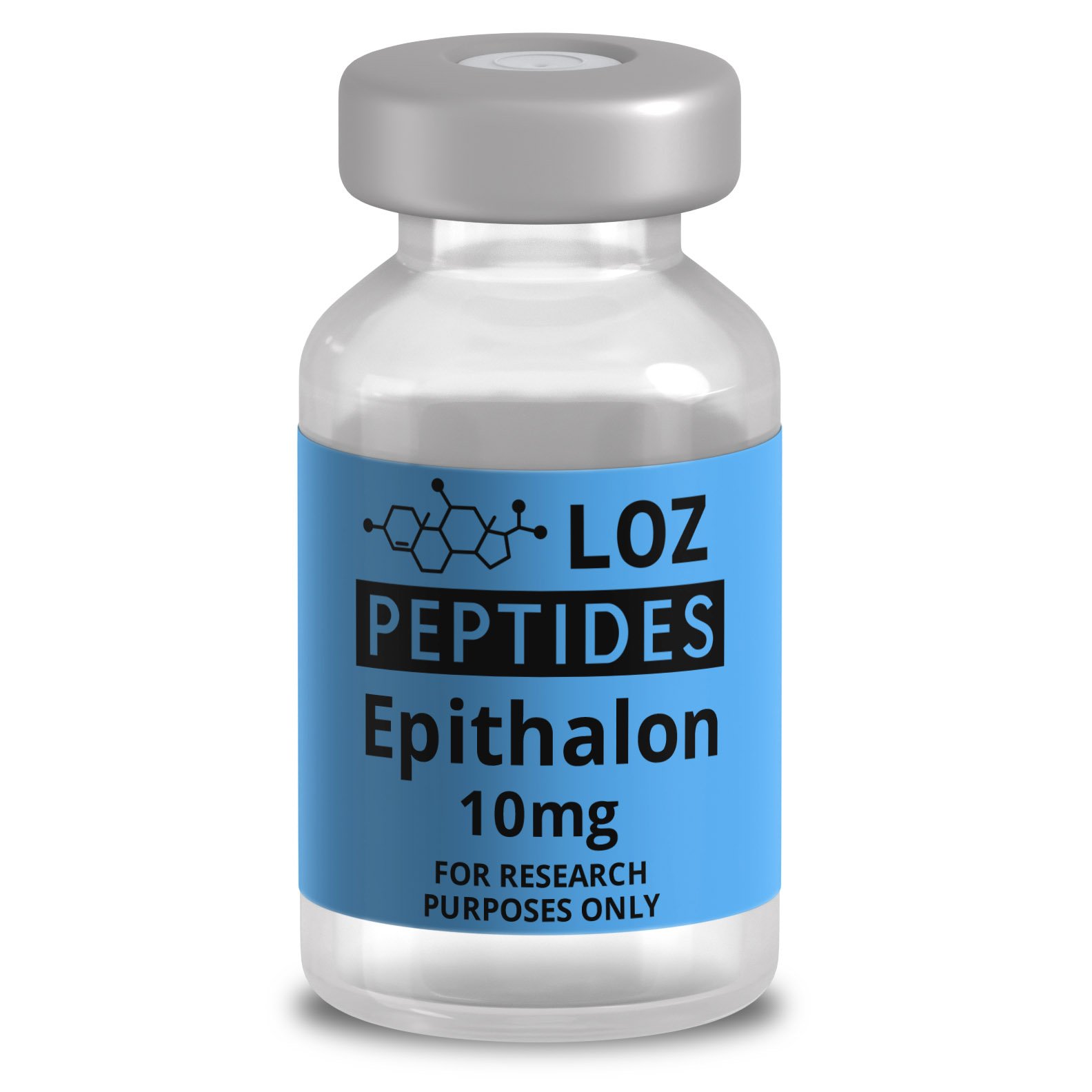
Epithalon (Epitalon) is a synthetic tetrapeptide (Ala-Glu-Asp-Gly) developed by the St. Petersburg Institute of Bioregulation and Gerontology and studied for over 35 years by Dr. Vladimir Khavinson and colleagues. It is one of the most rigorously researched peptides in longevity science.
Epithalon activates telomerase (hTERT)—the enzyme responsible for elongating telomeres at the ends of chromosomes. Telomere attrition is a primary hallmark of cellular aging; as telomeres shorten with each division, cells enter senescence and die. By upregulating telomerase activity in somatic cells, Epithalon directly addresses this mechanism at its root.
Published research in human and animal models demonstrates: significant lifespan extension, normalized melatonin secretion and circadian rhythm function, suppression of tumor incidence, improved immune parameters in elderly subjects, and restoration of antioxidant enzyme activity. Epithalon remains the most studied telomerase-activating peptide in gerontology.
For research use only.